Frequently Asked Questions
Thank you! Your submission has been received!
Oops! Something went wrong while submitting the form.
No Results
No articles match your search. Try resetting your filters or using a different keyword.
Our refund policies and exception rules are strict by design. Isn't that just protecting the business?
Strict rules protect margins in the short term, but unreasonably rigid policies often cost you more in churn and lost customer trust. To keep your policies flexible, build in clear pathways for agents to make exceptions based on context.
No items found.
We need to overhaul our CX policies. Where should we start?
Start with transparency and the policies that touch the most customers. Depending on your business type, that might include return policies, free trial policies, or cancellation policies. Communicate your rules clearly upfront and give your team room to use judgment on edge cases. Small, focused changes can make a big difference, and a SupportNinja's MomentumLabs CX transformation practice can help you prioritize the fixes that matter most.
No items found.
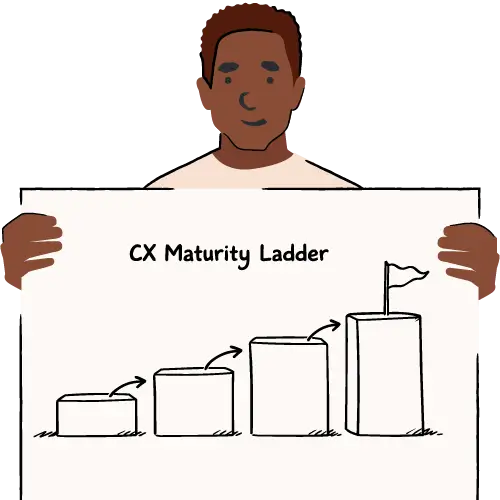
What are the four stages of CX maturity?
CX maturity progresses through four stages, each reflecting how structured, proactive, and data-driven your operations are: Emerging, Structured, Proactive, and Predictive.
No items found.
Is the Predictive stage the right goal for every company?
No. Predictive CX isn't the best fit for every organization — for many companies, the Proactive stage is genuinely the right destination. When that's the case, focus on maintaining it well rather than chasing a level that doesn't match your goals.
No items found.
How can SupportNinja help me assess and improve my CX maturity?
We start by identifying exactly where you sit on the maturity ladder and defining your short-term and long-term goals. We’ll work with you to determine the right level of CX maturity for your business, build a personalized roadmap, and execute and iterate alongside your team over time. We work with companies at every level of CX maturity — wherever you are, we help you take the next step with confidence.
No items found.
Our ticket backlog spikes occasionally but usually resolves on its own. Can SupportNinja still help?
Yes — and being prepared before a spike hits is exactly the point. Backlogs can surge with little warning, so having a partner already aligned with your operation makes a real difference when volume climbs.
SupportNinja’s CX transformation experts can also help you identify and fix what's making your CX less efficient — whether that's routing gaps, self-service blind spots, or workflow inefficiencies — so each surge puts less strain on your team than the last.
No items found.
Are ticket backlogs always a bad thing?
Not necessarily. Some backlog is normal, and signals that customers are engaged with your brand. A backlog rate of up to 10% is generally manageable — the problem starts when volume continually outpaces your team's capacity and tickets sit open for too long.
No items found.
How fast can SupportNinja help clear an existing ticket backlog?
Fast. We've stepped in under emergency conditions and handled thousands of tickets for clients managing rapid growth. In one engagement, we helped a client clear 650+ orders in just 5 days.
No items found.
Do you have unanswered questions?
Contact Us