

Challenge
Results

Written by


Craig Crisler
The Full Story
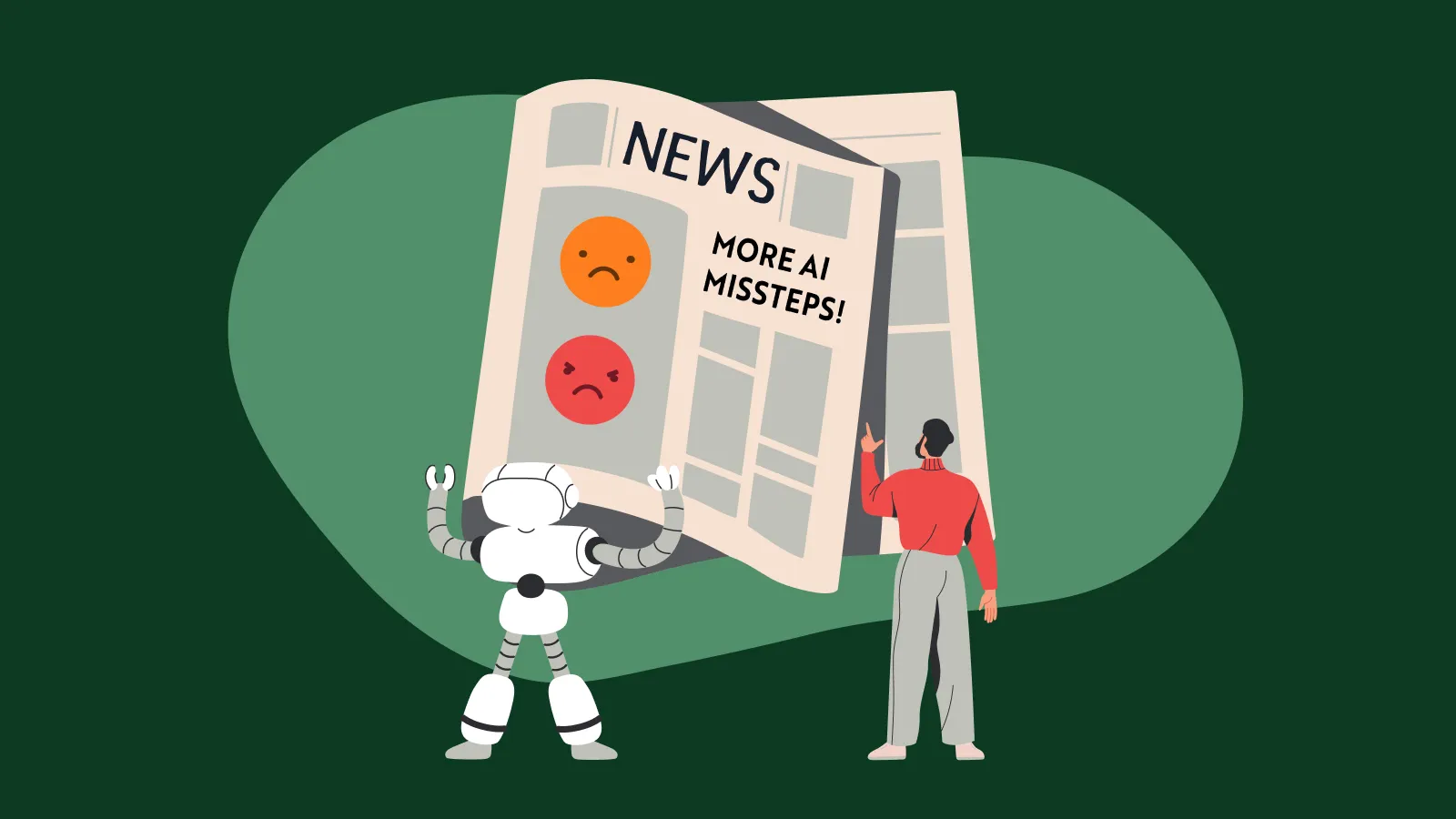
AI is everywhere — in the news, in your inbox, and likely in your CX strategy. But the fallout from brands like Duolingo and Klarna reminds us that strategy and implementation matter just as much as innovation.
For business leaders weighing the pros and cons of AI adoption, these negative stories can feel like cautionary tales — one wrong move can damage years of brand reputation and customer trust.
Take recent examples like Duolingo and Klarna, both of which faced backlash after committing to AI-first strategies at scale. Public criticism was swift, as were customer complaints and canceled memberships.
Even so, AI remains one of the most powerful tools for modern businesses seeking to scale operations efficiently. How can you integrate AI into your operations while maintaining trust, mitigating risk, and delivering exceptional CX?
Public Perception of AI Isn’t Black and White
Customer reactions to AI depend on how it’s applied and how it impacts their experience.
When cost-cutting is the primary KPI, most AI deployments damage CX. Both Duolingo and Klarna learned this the hard way. Duolingo’s heavy reliance on AI for content creation alienated customers, leading to app deletions, social media backlash, and eroded trust, even among previously loyal users. Klarna faced backlash for automating customer service functions so extensively that users felt ignored and unsupported.
Consumers have more nuanced feelings about AI than what’s portrayed in media coverage. In many cases, they’re not inherently anti-AI, but lose patience when automation replaces the human touch entirely. They want relevant, personalized, and seamless interactions, with or without AI.
The takeaway? The issue isn’t AI itself — it’s careless implementation and a lack of consideration for customer experience.
What Smart AI Implementation Actually Looks Like
Poor AI implementation risks alienating customers and damaging your brand, as evidenced by the media coverage of the Klarna and Duolingo AI issues.
Here are some best practices to follow for a balanced, intentional approach that lets you harness AI’s benefits while preserving the human touch customers value:
AI Should Empower Your People, Not Replace Them
Some companies still treat AI like a quick way to cut costs. But that mindset leads straight to customer backlash.
AI tools should complement your team and improve CX. Instead of deflecting tickets just to save money, the real value of AI lies in using resources more efficiently to enable faster resolutions without sacrificing quality.
For example, AI tools can handle repetitive, data-focused aspects of customer support interactions, like taking notes or offering suggestions for brand-aligned language. By letting AI handle these repetitive tasks, you free up human agents for complex, high-stakes interactions that demand empathy and creativity.
Do: Use AI strategically to improve efficiency and empower your team.
Don’t: Over-rely on AI in ways that create friction or compromise CX.
Don’t Trap Customers in a Bot Loop
When customers can’t reach a person, especially in emotional or complex moments, it moves beyond service and becomes a trust issue.
The Klarna AI backlash is a perfect example. When customers were unable to escalate issues to real people, they felt abandoned in a system that prioritized automation over service.
Customers shouldn’t have to fight their way to a human. If AI hits a wall, escalation should be seamless. Successful AI acts as the first line of support, handling simple queries — like those based on your knowledge base or established policies — while more complex issues are routed to live agents.
Do: Ensure seamless escalation to a human agent when the situation requires it.
Don’t: Create barriers that prevent customers from accessing human help when needed.
Tech-First? Try Strategy-First
Effective AI integration starts with a clear, strategic approach. Rushing to implement off-the-shelf tools without aligning them with your business goals can lead to costly disappointments if the technology worsens your CX or doesn’t deliver ROI.
To unlock AI’s true potential, tailor your tech stack to align with your unique workflows and customer expectations.
Do: Take the time to select AI solutions that strategically align with your goals and customer needs.
Don’t: Rush to roll out one-size-fits-all AI tools without a clear strategy.
Enhance QA and Keep Humans in the Loop
AI tools transform quality assurance (QA) by handling tasks on a scale that’s out of reach with other methods.
Whereas manual QA reviews only a small fraction of interactions, leaving gaps in decision-making, AI tools can analyze 100% of CX interactions for actionable insights that enhance performance and reveal trends across all touchpoints.
Still, human-in-the-loop (HITL) processes are vital for maintaining quality control and preventing issues like rogue AI chatbots.
Do: Use AI to enhance QA efforts by providing deeper insights and real-time analysis.
Don’t: Leave QA processes solely up to AI without human review.
Scale Smarter with SupportNinja’s AI and CX Expertise
AI implementation can make or break customer trust. The brands making headlines didn’t fail because they used AI — they failed because they led with tools, not strategy.
At SupportNinja, we help companies avoid that trap.
Our approach starts with your customer journey and business priorities. Then we integrate AI where it makes the most impact: enabling faster resolutions, improving consistency, and empowering agents to focus on what matters most..
Whether you’re early in your AI journey or refining your current setup, we bring deep experience in AI-enabled CX operations.
And because we’re tech-agnostic, we tailor every solution to your needs, never locking you into tools that don’t serve your goals.
Here’s what that looks like in action:
- 43% reduction in after-call work (ACW)
- 10-15% improvement in average handle time (AHT)
- 15-20% more tickets handled per shift
- 96% quality score for email
- 98% quality score for chat
Curious how we can tailor AI to fit your business needs? Let’s get started.
Growth can be a great problem to have
As long as you have the right team.
.svg)